Your investment
Your tax situation
Assumptions
Under the new rules from 1 July 2027, only your real (above-inflation) gain is taxed. Adjust the rate to see how it affects your result.
| Inflation p.a. | 50% discount rules | Transitional | Difference |
|---|---|---|---|
| 0.00% | $84,000 | $72,925 | −$11,075 |
| 0.50% | $84,000 | $74,318 | −$9,682 |
| 1.00% | $84,000 | $75,739 | −$8,261 |
| 1.50% | $84,000 | $77,189 | −$6,811 |
| 2.00% | $84,000 | $78,667 | −$5,333 |
| 2.50% | $84,000 | $80,175 | −$3,825 |
| 3.00% | $84,000 | $81,712 | −$2,288 |
| 3.50% | $84,000 | $83,122 | −$878 |
| 4.00% | $84,000 | $84,433 | +$433 |
| 4.50% | $84,000 | $85,770 | +$1,770 |
| 5.00% | $84,000 | $87,133 | +$3,133 |
This calculator uses the time apportionment transition method set out in the Treasury Laws Amendment (Tax Reform No. 1) Act 2026 and assumes investment gains accrue evenly over the holding period. It uses your selected inflation rate as a proxy for CPI and applies Australian resident individual tax rates from 1 July 2024, including the Medicare levy by default.
The calculator also assumes post 1 July 2027 gains are taxed at the higher of your selected marginal tax rate or the 30% minimum CGT rate.
The calculator doesn’t account for all personal circumstances or tax rules, including main residence exemptions, small business CGT concessions, company or trust structures, carried forward losses, depreciation, foreign tax offsets, employee share scheme rules or other tax adjustments.
The Government has also indicated taxpayers may alternatively be able to use a market valuation method at 1 July 2027. This calculator does not model that alternative methodology.
Results are estimates only and actual outcomes may differ materially depending on ATO guidance and your personal circumstances. Always speak with a registered tax adviser before making financial or investment decisions.
- The calculator assumes the Federal Budget 2026 CGT changes commence from 1 July 2027, as legislated under the Treasury Laws Amendment (Tax Reform No. 1) Act 2026.
- Capital gains relating to the period before 1 July 2027 are assumed to remain eligible for the existing 50% CGT discount. Gains relating to the period after 1 July 2027 are assumed to use inflation indexation, with annual compound inflation applied to the cost base for that portion of the holding period.
- The calculator uses the time apportionment transition method set out in the Treasury Laws Amendment (Tax Reform No. 1) Act 2026, which allocates gains between the old and new systems based on how long the asset was held before and after 1 July 2027.
- The Government has also indicated taxpayers may alternatively be able to use a market valuation method at 1 July 2027. This calculator does not model that alternative methodology.
- The calculator assumes post 1 July 2027 gains are taxed at the higher of:
- your selected marginal tax rate
- the 30% minimum CGT rate
- Marginal tax rates include the 2% Medicare levy, unless excluded in tax situation settings. The rates currently used are:
- $18,201 – $45,000 — 18%
- $45,001 – $135,000 — 32%
- $135,001 – $190,000 — 39%
- over $190,000 — 47%
- Any buying and selling costs entered are included in the investment cost base.
- Figures are rounded to the nearest dollar and should be treated as estimates only.
- The calculator doesn’t account for all individual circumstances or tax rules, including carried forward losses, small business CGT concessions, company or trust structures, discretionary trust distribution rules, foreign tax offsets, employee share scheme rules, superannuation assets, depreciation, land tax, state based taxes or the Medicare levy surcharge.
CGT questions?
We're here to help

From 1 July 2027, the 50% CGT discount for individuals, trusts and partnerships will be replaced with cost base indexation. This means capital gains will be adjusted for inflation, with tax generally applied to the real gain. A 30% minimum tax rate will also apply to capital gains. The changes can affect shares, ETFs, managed funds, investment properties, crypto and other CGT assets held outside super.
The reforms do not apply in the same way to companies or super funds, and existing assets may be subject to transitional rules.
Stockspot is Australia's largest online investment adviser, helping more than 20,000 Australians invest and manage over $1.4 billion efficiently.
We build and manage diversified ETF portfolios for clients, with balances from $1,000 to over $5 million. Our portfolios are designed to be low-cost, transparent and professionally managed, with automatic rebalancing and annual tax reporting to make investing easier.
Stockspot portfolios are designed for long-term investing, not frequent trading. That can help reduce unnecessary realised capital gains and keep more of your money working over time.
We use diversified ETFs, which are generally more tax efficient than many actively managed funds because they usually have lower turnover.
Stockspot also helps by:
- Rebalancing portfolios only when needed
- Using client cash flows where possible before selling investments
- Providing annual tax statements to make tax time easier
- Giving clients visibility over income, franking credits, capital gains and realised returns
Tax outcomes depend on your personal circumstances, but disciplined, long-term investing can help reduce unnecessary tax drag.
From 1 July 2027, Australia's capital gains tax rules are changing.
For individuals, trusts and partnerships, the current 50% CGT discount will be replaced by cost base indexation. This means the purchase cost of an asset will be adjusted for inflation, and tax will generally apply to the real gain rather than the full nominal gain.
A 30% minimum tax rate will also apply to capital gains.
The changes can apply to CGT assets such as shares, ETFs, managed funds, investment properties, crypto and business assets held outside super.
The new CGT rules could affect individuals, trusts and partnerships that hold investments outside super.
This may include people who own:
- Shares
- ETFs
- Managed funds
- Investment properties
- Crypto assets
- Business assets
- Startup equity or employee share schemes
Super funds and companies have different tax rules, so the impact may not be the same.
Existing investments may also be treated differently under transitional rules, so investors should get personal tax advice before making decisions.
Yes. The CGT changes are not limited to property.
They can apply to many CGT assets held outside super, including shares, ETFs, managed funds, investment properties, crypto assets and business assets.
That means share and ETF investors should also consider how the new rules may affect their long-term after-tax returns, especially if they realise capital gains after 1 July 2027.
From 1 July 2027, a minimum 30% tax rate will apply to capital gains.
This means some investors may pay at least 30% tax on their taxable capital gains, even if their marginal tax rate is lower.
The rule is designed to apply alongside the new cost base indexation system. The exact impact will depend on your income, asset type, holding period, inflation, gains realised and personal tax situation.
This calculator focuses on the CGT changes only. It does not model the separate negative gearing changes, rental income, interest deductions, property expenses, land tax, stamp duty or other costs that may affect investment property outcomes.
Assets bought before 1 July 2027 may be subject to transitional rules.
In broad terms, gains that accrue before 1 July 2027 may continue to be treated under the existing CGT rules, while gains accruing from 1 July 2027 may be assessed under the new rules.
This means some investors may need to separate gains before and after 1 July 2027 when calculating future CGT.
The calculator uses simplifying assumptions to estimate this impact. Your actual tax outcome may differ, so you should speak with a registered tax adviser before making decisions.
Under the current system, individuals, trusts and partnerships can generally reduce a capital gain by 50% if they hold the asset for more than 12 months.
Under the new system from 1 July 2027, the 50% discount will be replaced by cost base indexation. Instead of automatically discounting the gain by 50%, the original purchase cost of the asset is increased in line with inflation. Tax is then applied to the remaining real gain.
The difference matters because the better outcome depends on the asset's return, inflation and how long the investment is held.
If asset prices grow much faster than inflation, the new system may result in more tax than the current 50% discount. If inflation is high and asset growth is lower, indexation may be more favourable.
The new CGT rules apply from 1 July 2027.
They do not apply to Tax Time 2026. Further ATO guidance and implementation resources may be released before the rules begin.
This calculator is designed to help investors estimate the potential impact of the new rules based on the information currently available.
This calculator provides an estimate only.
It compares the current CGT discount system with the new cost base indexation and 30% minimum tax framework using the inputs you provide.
Your actual tax outcome may differ because it can depend on your income, asset type, holding period, inflation, capital losses, deductions, ownership structure, tax residency and future ATO guidance.
The calculator should be used as a guide, not as tax, legal or financial advice.
This calculator is provided for general information and educational purposes only. It is designed to estimate the potential impact of Australia's CGT changes that apply from 1 July 2027.
The calculator does not take into account your personal objectives, financial situation or needs and should not be relied on as personal tax, legal or financial advice. You should seek advice from a registered tax adviser or licensed financial adviser before making investment or tax decisions.
No. This calculator is an educational tool that provides general information only.
It does not take into account your personal objectives, financial situation or needs, and should not be relied on as personal tax, legal or financial advice.
Before making investment or tax decisions, you should speak with a registered tax adviser or licensed financial adviser.
No. The calculator is free to use and does not require a Stockspot account.
You can enter your investment details to estimate how the new CGT rules may affect your after-tax return.
We also don't store, save or retain the information you enter into the calculator.
Yes. The way you invest can influence how much capital gains tax you pay over time.
Frequent buying and selling can create more realised capital gains and more tax reporting. A long-term, diversified investment strategy may help reduce unnecessary turnover and keep more of your money invested.
Stockspot portfolios are designed for long-term investing, using low-cost ETFs, disciplined rebalancing and annual tax reporting to help make investing simpler and more tax aware.
Tax outcomes depend on your personal circumstances, so investors should seek personal tax advice.
Yes, for individuals, trusts and partnerships, the 50% CGT discount is being replaced by cost base indexation from 1 July 2027.
Instead of halving the capital gain after holding an asset for more than 12 months, the new rules adjust the asset's cost base for inflation and apply tax to the remaining gain. A 30% minimum tax rate will also apply to capital gains.
The new CGT changes are focused on individuals, trusts and partnerships.
Super funds have their own tax rules, so the impact may be different for investments held inside super.
This is why investors may want to consider where they hold long-term investments, including whether assets are held personally, through a trust, company or super fund.
Not necessarily.
Selling investments can trigger tax, transaction costs and portfolio changes. It may also move you away from your long-term investment plan.
Tax is only one part of an investment decision. Before selling investments because of the CGT changes, it's important to consider your goals, risk profile, time horizon and personal tax position.
You should seek personal tax or financial advice before making a decision.
You can use the calculator to estimate the impact on assets such as shares, ETFs, managed funds, investment properties, crypto assets and other investments held outside super.
The calculator is intended as a guide only. It may not capture all tax rules, exemptions, deductions, capital losses or personal circumstances.
Not always.
The impact depends on your asset return, inflation, holding period, income and tax rate.
If your investment grows much faster than inflation, the new rules may result in a higher tax bill than the current 50% CGT discount. If inflation is high and your real gain is lower, cost base indexation may reduce the taxable gain.
That's why the calculator is useful: it helps estimate the difference based on your assumptions.
Get your portfolio in four easy steps
Stockspot is Australia's first and largest online investment adviser specialising in ETFs. We set up and manage an ETF portfolio tailored to your goals. There's no paperwork and no need to be an expert.
Create your account
Go through the questionnaire to receive a suitable core strategy recommendation
Tell us about your investment goals
We use our smart algorithms to tailor the best-suited ETF portfolio for you
Get your personalised portfolio
After we recommend a strategy, you either choose that strategy, or you might opt for another one
Make a deposit & start investing
Get started by making your first deposit

A personalised dashboard to view your portfolio
Add to your investments to grow your wealth faster.
Keep track of your investment goals.
Learn with our regular news, insights and research.
View your personal dashboard on any device.
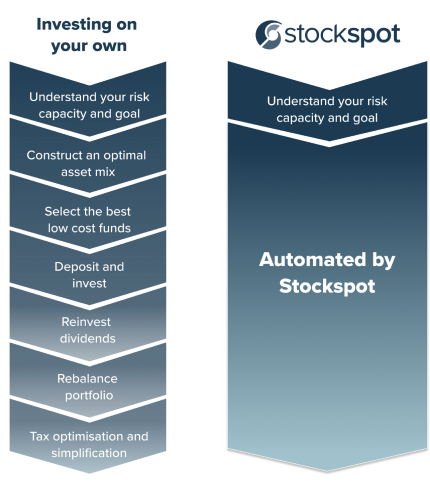
How Stockspot saves you time and money
We're an online investment advisor that builds you a personalised portfolio of ETFs.
We manage the rebalancing and ensure your investments remain diversified.
Diversification
We maintain a suitable investment mix for your situation and investing goals

Example of our turquoise (balanced) portfolio
Automatic rebalancing
We automatically rebalance your portfolio so it remains healthy
Stocks go up (buying stocks)
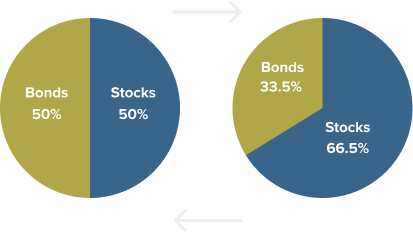
Stocks go down (buying bonds)
125 hours
Time saved each year compared to managing your portfolio yourself
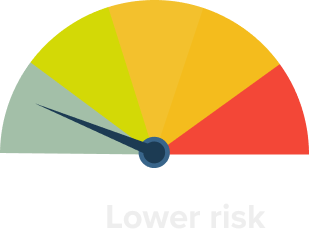
30% - 60%
Reduction in risk compared to only owning Australian shares
Trusted by thousands of Australians



Winner, Best FinTech Wealth Management Platform, 2020

Winner, Excellence in Wealth Management, 2021

Finalist, Best Investment Innovation, 2020